COMPLETE RESEARCH FILE: FRAGMENTUM

This page presents the COMPLETE RESEARCH FILE for FRAGMENTUM, a documentary-artistic inquiry that maps the archaeology of memory and the fragile boundaries between human habitation and the natural world.

RESEARCH TOPOGRAPHY: DATA POINT REFERENCE + Fieldwork- LOG_02.2021
FRAGMENTUM represents a milestone in my career as my first modular installation. It was born from an interdisciplinary dialogue between a painter’s eye and an anthropological lens. Working alongside researcher and anthropologist Cristina Irian, I embarked on a mission to rescue the “absent material culture” of five abandoned houses, turning theoretical research into a tactile narrative

Project Core (The Research Shell)

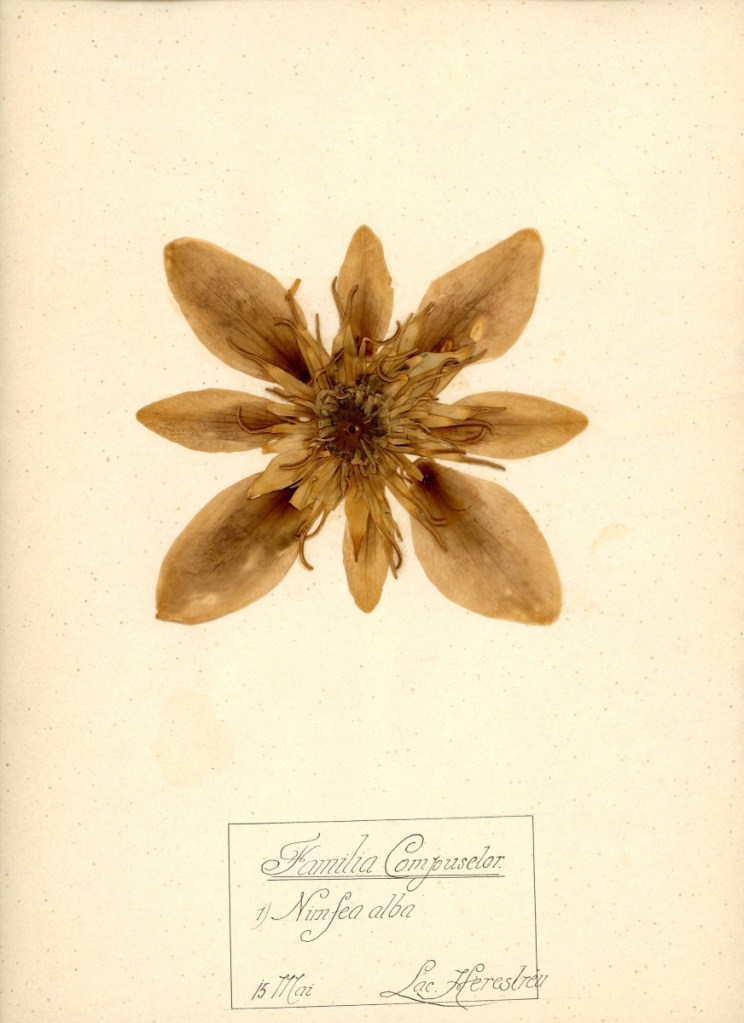
Primary Sources: The research is founded upon a late 19th-century herbarium and original wall fragments retrieved from the sites. Project Nature: A documentary-artistic (docu-art) investigation into the “absence of material culture” within community spaces. Research Subjects: An inventory of 5 abandoned houses (4 in Neamț County, 1 in Argeș County) analyzed as narrative cells of habitation. Research Focus: Mapping the coexistence between the human species and the plant world within the house-garden ecosystem.+4

Materiality & Fragility: The Atypical Support

My artistic discourse is fundamentally linked to fragile and atypical supports. For “Zidul Pergament,” I chose watercolor paper (acrylic on paper in mixed media), a delicate medium that mirrors the vulnerability of the history we were salvaging. This strategic use of fragile materials creates a temporal bridge to my later practice of painting on recycled bedsheets, maintaining a coherent focus on the archaeology of memory and the preservation of chaotic, emotional content.

The Philosophy: Painted Icons vs. Living Plants

At its core, the project explores the wall as an expression of the limit—a boundary where the interior mirrors the exterior. It analyzes the contrast between the “painted vegetal model”—the stylized, decorated flora inside human homes—and the “real plant” in the garden, cohabitating with the residents.

the artists
  • The Painter (Roxana Donaldson): I translated the narrative research into the “Parchment Wall” (Zidul Pergament), a monumental 1.5 x 10m Mixed Media work.
  • The Anthropologist (Cristina Irian): Produced the “Mobile Walls” (Zidurile Mobile), utilizing theatrical props (butaforie) and objects to symbolically reproduce the architecture and symbolic walls of an abandoned home.
The Temporal Loop: Saving Iconographies

FRAGMENTUM functions as a temporal loop designed to save and document different iconographies of presenting the flower across history:
The Window/Wall/Wallpaper: The abstraction of nature into domestic iconography and original decorations.
The Herbarium: The scientific and artistic preservation of a physical specimen.
The Botanical Notebook: A personal, stylistic chronicle of the vegetal world.

Modular Evolution: From the Ice House to the White Tower

As my first modular installation, FRAGMENTUM was designed to alter its internal parameters with each site-specific display.+3

The White Tower (Turnul Alb, IBCA Brasov 2021): The installation was reconfigured for a medieval architectural vestige. Moving the work from the subterranean shadows of an ice house to the verticality of a defensive tower proved that memory is not static, but an adaptable, modular archive. The Ice House (Ghețărie, Mogoșoaia): The project debuted in a subterranean, multisensory environment, exploring the closed system of a deserted 19th-century house.

Concept

Enriched with four new paintings and in a new configuration, “The Aftermath of Safety” is the second reincarnation of the “Safety First!” modular installation, created by visual artist Roxana Donaldson and first exhibited in June 2025 at DalgART.

Operating at the intersection of Conceptual Art, Immersive Installation, and Process Art (emphasis on abrasive materials and temporal tension, similar to Arte Povera), the installation transforms the space into a systemic experience of anxiety.

The visitor to “The Aftermath” installation is invited to interact with the works as they would with their own fear, to deconstruct their defense mechanisms, and, hopefully, find their own path to liberation.

Structure

“The Aftermath of Safety” serially materializes an Invasion of Spheres, Protective Diagrams, Failed Schematics, and Impossible X-Rays, each representing possible paradigms of Metastasized Fear. The paintings are extended by assemblage art objects (the black spheres) that embody three different emotional pillars: Beautiful Illness, Beautiful Anxiety, and Precious Remedies.

Exhibitions

In 2025, Safety First was on view at DalgART Craiova and at Calea Victoriei 91-93 Gallery, Bucharest.
The artist continues to update it by adding new pieces that recreate a new anxiety proposition with each new space and display.

Curatorial Text
Project Core (The Research Shell)

Primary Sources: The research is founded upon a late 19th-century herbarium and original wall fragments retrieved from the sites. Project Nature: A documentary-artistic (docu-art) investigation into the “absence of material culture” within community spaces. Research Subjects: An inventory of 5 abandoned houses (4 in Neamț County, 1 in Argeș County) analyzed as narrative cells of habitation. Research Focus: Mapping the coexistence between the human species and the plant world within the house-garden ecosystem.+4

Materiality & Fragility: The Atypical Support

My artistic discourse is fundamentally linked to fragile and atypical supports. For “Zidul Pergament,” I chose watercolor paper (acrylic on paper in mixed media), a delicate medium that mirrors the vulnerability of the history we were salvaging. This strategic use of fragile materials creates a temporal bridge to my later practice of painting on recycled bedsheets, maintaining a coherent focus on the archaeology of memory and the preservation of chaotic, emotional content.